
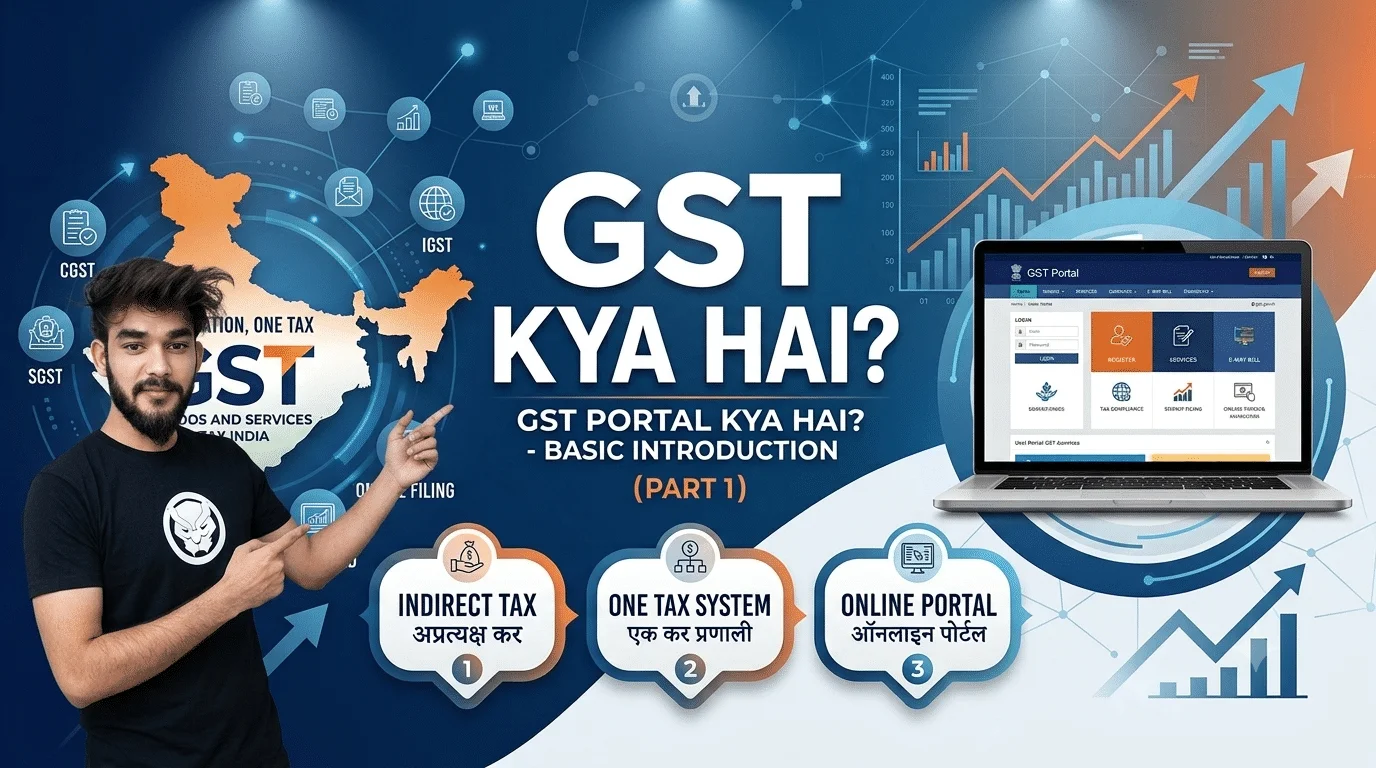

Introduction
GST का पूरा नाम Goods and Services Tax है। भारत में यह taxable goods और services की supply पर लागू होने वाला indirect tax है। GST की applicability transaction की nature, supply के स्थान और संबंधित GST provisions पर निर्भर करती है।
GST Calculation Example
मान लीजिए किसी taxable product की value ₹10,000 है और उस product पर लागू GST rate 18% है।
- Taxable value: ₹10,000
- GST @ 18%: ₹1,800
- Total invoice value: ₹11,800
यदि इस transaction पर intra-state supply के नियम लागू होते हैं और 18% rate लागू है, तो उदाहरण के लिए CGST ₹900 और SGST ₹900 हो सकते हैं।
Important: 18% केवल इस Example के लिए इस्तेमाल किया गया rate है। सभी goods और services पर 18% GST नहीं लगता। वास्तविक transaction में सही GST rate और classification को current official GST resources से verify करें।
इस Article में हम आसान भाषा में समझेंगे:
- GST क्या है?
- GST क्यों लागू किया गया?
- GST कैसे काम करता है?
- CGST, SGST और IGST क्या हैं?
- GSTIN क्या है?
- GST Registration क्या है?
- GST Portal क्या है?
- GST Portal पर क्या-क्या काम होते हैं?
- GST Invoice क्या है?
- Input Tax Credit क्या है?
- GST Return क्या है?
- GST Payment कैसे होता है?
- Practical GST Examples
- GST से जुड़े Important Terms
- Common Questions & Answers
What is GST?
GST का Full Form – Goods and Services Tax है।
GST एक indirect tax है जो taxable goods और services की supply पर applicable provisions के अनुसार लगाया जाता है।
सरल भाषा में:
जब कोई taxable goods या service एक business द्वारा customer को supply की जाती है, तो applicable GST provisions के अनुसार उस transaction पर GST लग सकता है।

Example:-
मान लीजिए एक Arman ने taxable goods की supply की:
Goods Value = ₹10,000
अगर Applicable GST rate 18% है:
GST = ₹1,800
अगर transaction पर CGST और SGST applicable हैं:
- CGST = ₹900
- SGST = ₹900
Customer से total amount:
₹10,000 + ₹900 + ₹900 = ₹11,800
GST का Full Form
G – Goods
S – Services
T – Tax
इसलिए:
GST = Goods and Services Tax
When was GST implemented?
भारत में GST को 1 July 2017 से लागू किया गया।
GST लागू होने के बाद कई अलग-अलग indirect taxes को GST framework में subsume कर दिया गया।
GST का उद्देश्य indirect taxation system को अधिक integrated और uniform framework में लाना था।
Why was GST introduced?
GST भारत में कई अप्रत्यक्ष करों को एक ही टैक्स सिस्टम में शामिल करने, टैक्स प्रक्रिया को आसान बनाने और टैक्स पर टैक्स लगने की समस्या को कम करने के लिए लागू किया गया था।
GST Framework का एक प्रमुख उद्देश्य था कि Goods और Services की Supply पर indirect taxation को एक integrated system में लाया जाए।
GST के प्रमुख Objectives में शामिल हैं:
- Indirect tax system को simplify करना
- Multiple taxes को एक common framework में लाना
- Input Tax Credit mechanism उपलब्ध कराना
- Tax compliance को technology के माध्यम से facilitate करना
- पूरे देश में GST-based taxation framework बनाना
How does GST work?
GST को समझने के लिए एक simple example देखते हैं।
मान लीजिए:
Arman Traders Company ने Goods बेचे:
₹10,000 + GST
Distributor ने वही goods आगे बेचे:
₹15,000 + GST
Retailer ने customer को बेचा:
₹20,000 + GST
हर Stage पर Applicable GST charge हो सकता है, लेकिन eligible Input Tax Credit (ITC) के कारण Previous Stage पर Paid Eligible tax का credit लिया जा सकता है।
इससे taxation system में tax on value addition का concept समझने में मदद मिलती है।
Main types of GST
भारत में GST को broadly इन components में समझा जाता है:
- CGST
- SGST
- IGST
- UTGST
अब इन्हें एक-एक करके समझते हैं।
What is CGST?
CGST = Central Goods and Services Tax
जब applicable transaction same state के अंदर होता है, तो GST का एक हिस्सा Central Government द्वारा CGST के रूप में collect किया जाता है।
उदाहरण:
Taxable Value = ₹10,000
GST Rate = 18%
तो:
CGST @ 9% = ₹900
What is SGST?
SGST = State Goods and Services Tax
Same-state taxable transaction में GST का दूसरा हिस्सा संबंधित State Government के हिस्से के रूप में SGST होता है।
Example:
Taxable Value = ₹10,000
GST Rate = 18%
तो:
- CGST = ₹900
- SGST = ₹900
Total GST:
₹1,800
CGST + SGST Example
मान लीजिए Maharashtra में registered seller ने Maharashtra में ही customer को taxable goods बेचे।
Taxable value:
₹10,000
GST rate:
18%
Calculation:
Taxable Value = ₹10,000

CGST @ 9% = ₹900
SGST @ 9% = ₹900

Total GST = ₹1,800

Invoice Total = ₹11,800
What is IGST?
IGST = Integrated Goods and Services Tax
Inter-State supply पर applicable conditions के अनुसार IGST लगाया जाता है।
उदाहरण:
Maharashtra का Seller Goods Karnataka के Customer को supply करता है।
Taxable value:
₹10,000
Applicable GST rate:
18%
तो:
IGST @ 18% = ₹1,800
Total invoice:
₹11,800
Difference between CGST, SGST, and IGST
| GST Type | Full Form | सामान्य उपयोग |
|---|---|---|
| CGST | Central Goods and Services Tax | Applicable intra-state supply |
| SGST | State Goods and Services Tax | Applicable intra-state supply |
| IGST | Integrated Goods and Services Tax | Applicable inter-state supply |
| UTGST | Union Territory GST | Applicable supplies in certain Union Territories |
Actual tax treatment transaction की nature और applicable GST provisions पर depend करता है।
What is GSTIN?
GSTIN = Goods and Services Tax Identification Number
यह GST registered taxpayer को दिया जाने वाला identification number है।
GSTIN सामान्यतः 15 characters का होता है।
GSTIN का उपयोग:
- GST invoice
- GST return
- GST payment
- GST registration
- GST-related compliance
जैसे कामों में किया जाता है।
What is the difference between a GST Number and a GSTIN?
आम बोलचाल में लोग GST Number कहते हैं।
Official terminology में इसे:
GSTIN – Goods and Services Tax Identification Number
कहा जाता है।
What is GST Portal?
GST Portal भारत के GST system का online platform है, जहाँ registered taxpayers GST से संबंधित कई online services का उपयोग कर सकते हैं।
Official GST Portal:
GST Portal पर Taxpayer GST Registration, Return filing, Payment और कई अन्य GST-related services एक्सेस कर सकता है।

How to log in to the GST portal?
Official GST Portal: https://www.gst.gov.in/
- Official website खोलें।
- Login विकल्प चुनें।
- अपना registered username और password भरें।
- स्क्रीन पर माँगी गई captcha या अन्य verification पूरी करें।
- Login करके अपने account में उपलब्ध services खोलें।

Screenshot में अपना username, password, OTP, GSTIN या कोई अन्य confidential information दिखाई न दें। Portal का layout बदल सकता है, इसलिए प्रकाशित करने से पहले steps को खुद verify करें।
What tasks can be performed on the GST portal?
GST Portal पर कई महत्वपूर्ण services उपलब्ध होती हैं।
जैसे:
1. GST Registration
Eligible person/business GST registration के लिए online application कर सकता है।
2. GST Registration Status
Registration application का status cheack किया जा सकता है।
3. GST Return Filing
Applicable GST returns online file किए जा सकते हैं।
4. GST Payment
GST liability के payment से संबंधित online facilities उपलब्ध होती हैं।
5. GST Challan
Tax payment के लिए challan generate करने की facility उपलब्ध होती है।
6. GSTIN Related Services
GSTIN और taxpayer-related information को applicable portal services के माध्यम से verify किया जा सकता है।
7. Refund Application
Eligible cases में GST refund से संबंधित application की जा सकती है।
8. Registration Amendment
Registered taxpayer अपनी applicable registration details में amendment के लिए application कर सकता है।
9. GST Notices
Applicable communications/notices portal पर दिखाई दे सकते हैं।
10. Returns और Compliance
Taxpayer अपनी applicable filing और compliance activities portal के माध्यम से manage कर सकता है।

GST Registration basic Process
GST Registration का सामान्य Process
GST registration की जरूरत turnover, business activity, supply की nature और लागू कानूनी provisions पर निर्भर करती है। हर business के लिए एक ही नियम लागू नहीं होता।
सामान्य तौर पर:
- Official GST Portal खोलें।
- Services → Registration के अंतर्गत उपलब्ध New Registration विकल्प देखें।
- Applicant type और portal द्वारा माँगी गई शुरुआती details भरें।
- PAN, mobile number और email जैसी आवश्यक जानकारी देकर verification पूरी करें।
- मिलने वाले Temporary Reference Number (TRN) या portal के निर्देशों के अनुसार application आगे बढ़ाएँ।
- आवश्यक business details और documents भरें।
- जहाँ लागू हो, prescribed verification के बाद application submit करें।
- Portal पर उपलब्ध reference number से application status track करें और किसी clarification या notice का जवाब दें, यदि आवश्यक हो।
यह सामान्य learning guide है, हर applicant की पूरी document checklist नहीं। आवेदन करने से पहले portal के वर्तमान instructions और अपने case की requirements जाँचें।

What is a GST Invoice?
GST registered taxpayer द्वारा taxable supply के लिए applicable requirements के अनुसार tax invoice issue किया जा सकता है।
GST invoice में transaction से संबंधित important details हो सकती हैं, जैसे:
- Supplier name
- Supplier GSTIN
- Invoice number
- Invoice date
- Customer details
- Customer GSTIN, जहाँ applicable हो
- Description of goods/services
- HSN/SAC, जहाँ applicable हो
- Quantity
- Taxable value
- GST rate
- CGST
- SGST
- IGST
- Total invoice value

GST Invoice Example
मान लीजिए:
Product: Computer Accessories
Taxable Value:
₹10,000
GST Rate:
18%
Intra-state transaction के example में:
Product Value       ₹10,000
CGST @ 9%             ₹900
SGST @ 9%             ₹900
----------------------------
Total Invoice       ₹11,800
Customer से total:
₹11,800
What is Input Tax Credit (ITC)?
Input Tax Credit (ITC) वह eligible GST credit है जिसे Registered taxpayer, कानून में निर्धारित Conditions पूरी होने पर, अपनी output tax liability के विरुद्ध उपयोग कर सकता है।
सिर्फ purchase पर GST चुकाने से ITC अपने-आप eligible नहीं हो जाता। सामान्य तौर पर इन बातों की जाँच जरूरी होती है:
- खरीद business के लिए और taxable business activity से संबंधित हो।
- वैध tax invoice या prescribed document उपलब्ध हो।
- Goods या services की receipt और अन्य लागू conditions पूरी हों।
- Supplier reporting, return filing और credit से जुड़ी applicable requirements पूरी हों।
- GST law के तहत credit blocked या restricted न हो।
- Applicable time limits और prescribed records का पालन किया गया हो।
कुछ खर्चों या transactions पर ITC restricted या blocked हो सकता है। इसलिए हर purchase पर ITC claim करने से पहले संबंधित provisions verify करें।
ITC Calculation Example
मान लीजिए:
- Output GST liability: ₹3,600
- मान्य और eligible ITC: ₹1,800
सरल उदाहरण में, यदि पूरा ₹1,800 credit संबंधित liability के विरुद्ध उपयोग किया जा सकता है:
₹3,600 − ₹1,800 = ₹1,800
इसलिए उदाहरण में शेष liability ₹1,800 होगी।
यह केवल simplified calculation है। वास्तविक credit utilisation CGST, SGST और IGST के अलग-अलग ledger balances, utilisation order, restrictions और अन्य लागू नियमों पर निर्भर करता है। इस घटाव को हर परिस्थिति में अंतिम payable amount न मानें।
Input GST & Output GST
Input GST
Business ने Purchase करते समय जो Eligible GST Pay किया।
Output GST
Business ने Sale करते समय Customer से जो GST collect किया।
Example:
Purchase GST = ₹900
Sales GST    = ₹1,800
Applicable conditions के अनुसार eligible ITC के बाद tax liability calculate की जा सकती है।
What is GST Return?
GSTR-1 में applicable outward supply details report की जाती हैं। GSTR-3B में applicable taxpayer अपनी summary information, tax liability और eligible ITC जैसी जानकारी report करता है।
कौन-सा Return भरना है, किस Frequency से भरना है और कौन-सी Due date लागू होगी, यह taxpayer की Category और Current Rules पर निर्भर करता है। Filing से पहले official portal पर applicable requirements जाँचें।
GST Portal में Electronic Cash Ledger और Electronic Credit Ledger अलग-अलग काम करते हैं। Cash ledger में जमा रकम और credit ledger में उपलब्ध eligible ITC का उपयोग समान तरीके से नहीं होता। Credit का utilisation prescribed GST rules के अनुसार किया जाना चाहिए।जैसे forms शामिल हैं।
What is GSTR-1?
GSTR-1 में applicable outward supplies यानी sales/supply से संबंधित details report की जाती हैं।
Example:
अगर business ने taxable sales की हैं, तो Applicable Invoice/Supply Details GSTR-1 में Report की जा सकती हैं।
What is GSTR-3B?
GSTR-3B एक summary return/form है जिसमें applicable taxpayer अपनी outward supplies, tax liability और eligible ITC जैसी relevant details report करता है।
Actual filing requirements taxpayer की category और applicable rules पर depend करती हैं।
GST Payment क्या है?
अगर applicable GST calculation के बाद taxpayer की tax liability बनती है, तो prescribed process के अनुसार GST payment किया जाता है।
Simple example:
Output GST       = ₹1,800
Eligible ITC     = ₹900
--------------------------------
Tax Liability    = ₹900
यह simplified calculation है।
Actual payment में electronic cash/credit ledger और applicable rules को ध्यान में रखा जाता है।
What is an Electronic Cash Ledger?
GST system में taxpayer का Electronic Cash Ledger tax, interest, penalty, fee या अन्य applicable amounts के payment से संबंधित deposited amount को track करने के लिए इस्तेमाल होता है।
What is an Electronic Credit Ledger?
Eligible Input Tax Credit से संबंधित credit को GST system में Electronic Credit Ledger में reflect किया जा सकता है।
इस credit का utilization applicable GST provisions के अनुसार किया जाता है।
What is GST Challan?
GST payment के लिए required amount जमा करने हेतु GST Portal पर applicable process के अनुसार challan generate किया जा सकता है।
इसके बाद prescribed payment method से payment किया जाता है।

What is HSN Code?
HSN = Harmonized System of Nomenclature
HSN code का उपयोग goods को classify करने के लिए किया जाता है।
Example:
अगर कोई business computer-related goods बेचता है, तो applicable product classification के अनुसार relevant HSN code use किया जा सकता है।

What is SAC Code?
SAC = Services Accounting Code
SAC का उपयोग services को classify करने के लिए किया जाता है।
इसलिए:
- Goods → HSN
- Services → SAC
How to verify the GST rate?
किसी product या service पर GST rate तय करने से पहले:
- Product या service का सही description और classification पहचानें।
- जहाँ लागू हो, HSN या SAC classification verify करें।
- Official GST rate notifications या अन्य current official GST resources देखें।
- लागू conditions, exemptions और effective date जाँचें।
- अपने invoice या accounting entry में rate लगाने से पहले जानकारी दोबारा verify करें।
सिर्फ किसी दूसरे product पर लगा rate देखकर अपने product पर वही rate लागू न करें।
GST और Tally Prime
Tally Prime में GST purchase या sales entry करते समय transaction type, party GSTIN, place of supply, applicable tax rate, tax ledgers और invoice details सही configure करना जरूरी है।
Intra-state example में CGST और SGST तथा applicable inter-state example में IGST दिखाई दे सकता है। वास्तविक entry company configuration और transaction details के अनुसार बदल सकती है।
GST Example – Purchase
मान लीजिए:
Business ने goods खरीदे:
₹10,000
Applicable GST:
18%
Intra-state example:
Purchase Value = ₹10,000
CGST @ 9%      = ₹900
SGST @ 9%      = ₹900
--------------------------------
Invoice Total  = ₹11,800
GST Example – Sale
अब वही business goods को customer को:
₹20,000
मैं बेचता हूँ।
Applicable GST:
18%
Calculation:
Sales Value = ₹20,000
CGST @ 9%   = ₹1,800
SGST @ 9%   = ₹1,800
--------------------------------
Invoice Total = ₹23,600
अगर eligible ITC ₹1,800 है, तो simplified example में output GST ₹3,600 में से eligible ITC adjust होने के बाद balance liability ₹1,800 हो सकती है।
Actual ITC eligibility और utilization applicable law के अनुसार determined होगा।
GST में Important Terms
| Term | Meaning |
|---|---|
| GST | Goods and Services Tax |
| GSTIN | Goods and Services Tax Identification Number |
| CGST | Central Goods and Services Tax |
| SGST | State Goods and Services Tax |
| IGST | Integrated Goods and Services Tax |
| UTGST | Union Territory Goods and Services Tax |
| ITC | Input Tax Credit |
| HSN | Harmonized System of Nomenclature |
| SAC | Services Accounting Code |
| GSTR-1 | Applicable outward supply details return |
| GSTR-3B | Summary GST return/form |
| GST Portal | Online GST services platform |
GST और Tally Prime का Connection
अगर आप Tally Prime सीख रहे हैं, तो GST concepts को Tally में practical entries से जोड़ना बहुत जरूरी है।
उदाहरण:
Purchase
Purchase A/c        Dr. ₹10,000
Input CGST A/c      Dr. ₹900
Input SGST A/c      Dr. ₹900
      To Supplier A/c       ₹11,800
Sale
Customer A/c        Dr. ₹11,800
      To Sales A/c           ₹10,000
      To Output CGST A/c       ₹900
      To Output SGST A/c       ₹900
Tally Prime में actual entry company configuration, invoice mode, stock item, tax ledgers और transaction details के अनुसार अलग दिखाई दे सकती है।
Benefits of GST
GST framework के कुछ प्रमुख उद्देश्य/benefits में शामिल हैं:
- Common indirect tax framework
- Input Tax Credit mechanism
- Online compliance
- Digital record keeping
- GST registration और return filing की online सुविधा
- Tax administration में technology का उपयोग
Common Mistakes in GST
GST सीखते समय beginners अक्सर ये mistakes करते हैं:
1. गलत GST rate लगाना
Product/service का applicable rate verify किए बिना entry करना।
2. CGST और SGST की जगह गलत IGST लगाना
Supply की nature सही check नहीं करना।
3. GSTIN गलत enter करना
Invoice में supplier/customer GSTIN की details गलत होना।
4. Invoice Number गलत डालना
Invoice number और date को actual invoice से match नहीं करना।
5. HSN/SAC गलत लगाना
Goods/service classification को properly verify नहीं करना।
6. ITC को automatically eligible मान लेना
हर purchase पर GST paid होने का मतलब यह नहीं कि हर situation में ITC automatically available है।
7. GST Return में गलत data
Books और GST return data में mismatch होने से compliance issues हो सकते हैं।
Practical Tips for Those Learning GST
अगर आप GST बिल्कुल beginner हैं, तो इस order में सीखें:
- GST क्या है?
- Direct और Indirect Tax
- CGST
- SGST
- IGST
- GSTIN
- GST Registration
- GST Portal
- GST Invoice
- HSN/SAC
- Input Tax Credit
- GSTR-1
- GSTR-3B
- GST Payment
- GST in Tally Prime
इस sequence में सीखने से GST के concepts को समझना आसान हो सकता है।
Frequently Asked Questions (Q&A)
1. GST का Full Form क्या है?
GST का Full Form Goods and Services Tax है।
2. GST भारत में कब लागू हुआ?
GST भारत में 1 July 2017 से लागू हुआ।
3. GST Portal क्या है?
GST Portal भारत में GST-related online services और compliance activities के लिए official online platform है।
Official Portal:
4. GSTIN क्या है?
GSTIN का Full Form Goods and Services Tax Identification Number है। यह GST registered taxpayer का identification number है।
5. CGST क्या है?
CGST का Full Form Central Goods and Services Tax है।
6. SGST क्या है?
SGST का Full Form State Goods and Services Tax है।
7. IGST क्या है?
IGST का Full Form Integrated Goods and Services Tax है और applicable inter-state supplies पर इसका उपयोग किया जाता है।
8. ITC क्या है?
ITC यानी Input Tax Credit। Eligible conditions पूरी होने पर purchases पर paid eligible GST का credit output tax liability के against available हो सकता है।
9. GST Invoice क्या है?
Applicable taxable supply के लिए prescribed requirements के अनुसार issue किया जाने वाला tax invoice GST invoice कहलाता है।
10. HSN क्या है?
HSN यानी Harmonized System of Nomenclature। इसका उपयोग goods classification के लिए किया जाता है।
11. SAC क्या है?
SAC यानी Services Accounting Code। इसका उपयोग services classification के लिए किया जाता है।
12. GSTR-1 क्या है?
GSTR-1 में applicable outward supplies की details report की जाती हैं।
13. GSTR-3B क्या है?
GSTR-3B एक summary GST return/form है जिसमें applicable tax liability और ITC जैसी relevant information report की जाती है।
14. क्या हर business के लिए GST registration जरूरी है?
नहीं, GST registration की requirement business की turnover, activity, supply type और applicable provisions पर depend करती है।
15. क्या हर purchase पर Input Tax Credit मिलता है?
नहीं। ITC की eligibility applicable GST law और prescribed conditions पर depend करती है।
Quick GST Revision
GST
↓
Goods + Services पर applicable indirect tax
↓
CGST + SGST / IGST
↓
GSTIN
↓
GST Registration
↓
GST Invoice
↓
Input Tax Credit
↓
GST Returns
↓
GST Payment
Conclusion
GST भारत के indirect taxation system का एक important हिस्सा है। GST को समझने के लिए सबसे पहले इसके basic concepts जैसे CGST, SGST, IGST, GSTIN, GST Registration, GST Invoice और Input Tax Credit को समझना जरूरी है।
इसके साथ ही GST Portal का basic knowledge भी जरूरी है क्योंकि Registration, Returns, Payments और कई अन्य GST-related online services portal के माध्यम से manage की जाती हैं।
अगर आप Tally Prime या Accounting सीख रहे हैं, तो GST theory के साथ practical purchase और sales entries की practice करना भी उपयोगी है।
Simple example याद रखें:
Taxable Value = ₹10,000
GST @ 18%     = ₹1,800

Intra-State Example:
CGST @ 9% = ₹900
SGST @ 9% = ₹900

Invoice Total = ₹11,800
GST की किसी भी actual compliance, return filing या tax calculation से पहले current applicable provisions और official GST resources को verify करना जरूरी है।
Educational Disclaimer
यह article केवल educational purposes के लिए है। GST rates, registration requirements, ITC eligibility, return filing और tax treatment transaction तथा लागू कानून के अनुसार अलग हो सकते हैं। वास्तविक compliance से पहले current official GST resources देखें और जरूरत पड़ने पर qualified tax professional से सलाह लें।
Arman Skill Pro – Learn Skills • Build Your Career


Great insights! Thanks for sharing such valuable information. Looking forward to more posts like this.
Thank you for your encouraging feedback! It means a lot to us. We’ll continue sharing useful and informative content.